NetGalley Isn't Just for Book Launches
What happened when I used NetGalley to test a backlist book instead of a launch
I'd heard about NetGalley for years before I finally decided to try it.
If you're unfamiliar with it, NetGalley is a platform where publishers and authors make digital review copies available to librarians, booksellers, reviewers, bloggers, and readers. Members request books they're interested in reading and, ideally, leave feedback after they've finished.
The catch for most indie authors is access. Maintaining a publisher account can be difficult to justify unless you're publishing a significant number of titles.
That's where the Victory Editing NetGalley Co-op comes in. Instead of opening a publisher account of your own, the co-op allows independent authors to list books on NetGalley at a much lower cost.
I'd been curious about the platform for a while, but I wasn't interested in testing it on a new release.
Most authors think of NetGalley as a launch tool. Upload an ARC. Collect reviews. Build momentum. Launch the book.
That's how the platform is used. The problem is that most books spend very little time in launch mode.
A launch might last a few weeks or a few months. A book's backlist life can last for years.
That made me wonder whether authors might be overlooking one of NetGalley's most useful applications.
Instead of testing the platform with a new release, I decided to use a backlist title. The Fatherhood Mandate has been available for years and already has reviews, a sales history, and an established place within my catalog.
I wasn't looking for preorders, launch buzz, or early reviews. I wanted to answer a different question: Could NetGalley help an older book find new readers?
At first, I found myself watching the review count because that's what authors do. Reviews matter, and it's easy to understand why they become the primary metric we use to judge a campaign.
After a few days, though, I realized I was paying attention to the wrong number.
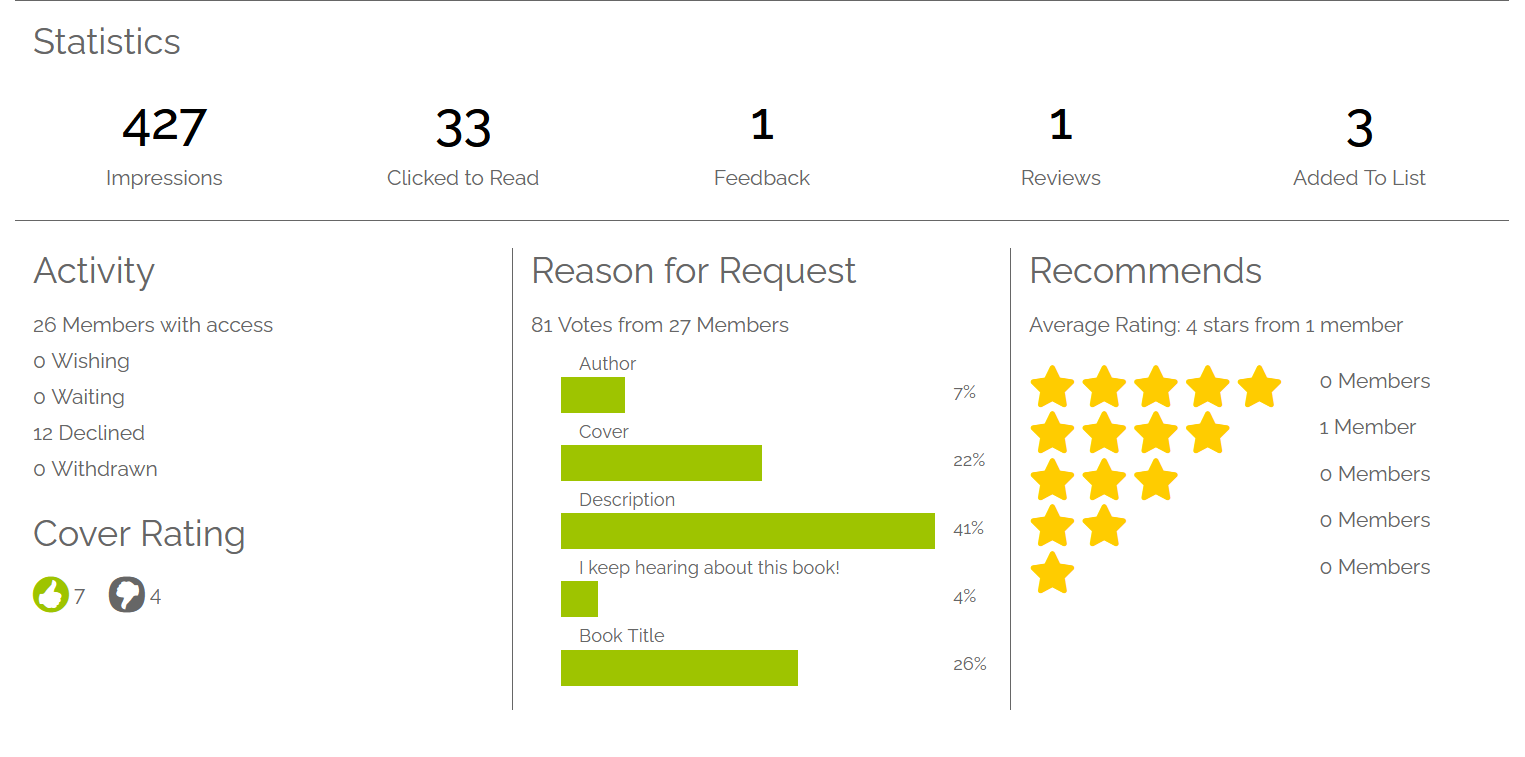
At the time of writing, the campaign had generated approximately 427 impressions, 33 clicks to read, 26 approvals, 21 downloads, and one review. Most discussions about NetGalley focus on that final number.
One review doesn't sound particularly impressive. It’s in NetGalley and was uploaded to Goodreads. Depending on your expectations, it might even sound disappointing.
The more interesting number was twenty-one downloads over nine days. Twenty-one people decided they wanted to read a book that has been available for years. That's very different from impressions or clicks because a download represents intent.
Someone saw the listing, found it interesting enough to request, and then took the extra step of adding it to an already crowded reading list. And that distinction changed how I thought about the platform.
Most authors evaluate NetGalley as though it sells reviews. I don't think that's actually what it sells. I think it sells discovery.
A review is simply the most visible outcome. What NetGalley really provides is an opportunity for readers to encounter books they might never have found otherwise. It’s used by academics, bloggers, teachers, social platforms, and even publishers with reading accounts.
When you look at the process that way, the statistics start to make more sense. An impression means someone saw the book. A click means they wanted to learn more. A request means they were interested enough to ask for access. An approval means they received the book. A download means they decided to spend time on it. A review is simply the final step in a much longer chain of events.
That's an important distinction because many authors judge NetGalley too quickly. Requests arrive, approvals go out, downloads begin, and then everyone waits for reviews.
The more I watched the campaign, the more I realized this might make NetGalley particularly useful for backlist books.
Most marketing systems are built around launches. Advertising spikes around release dates, newsletter promotions focus on new releases, and social media attention shifts to whatever comes next. Meanwhile, older books continue to exist with the same stories, the same information, and the same potential value they had on launch day. What changes is visibility.
For many books, visibility is the real problem. A strong series starter may no longer be reaching new readers. An evergreen nonfiction title may still be relevant years after publication.
A novel may have performed reasonably well but never reached its full audience. In many cases, it’s not a quality problem. It’s a discovery problem.